



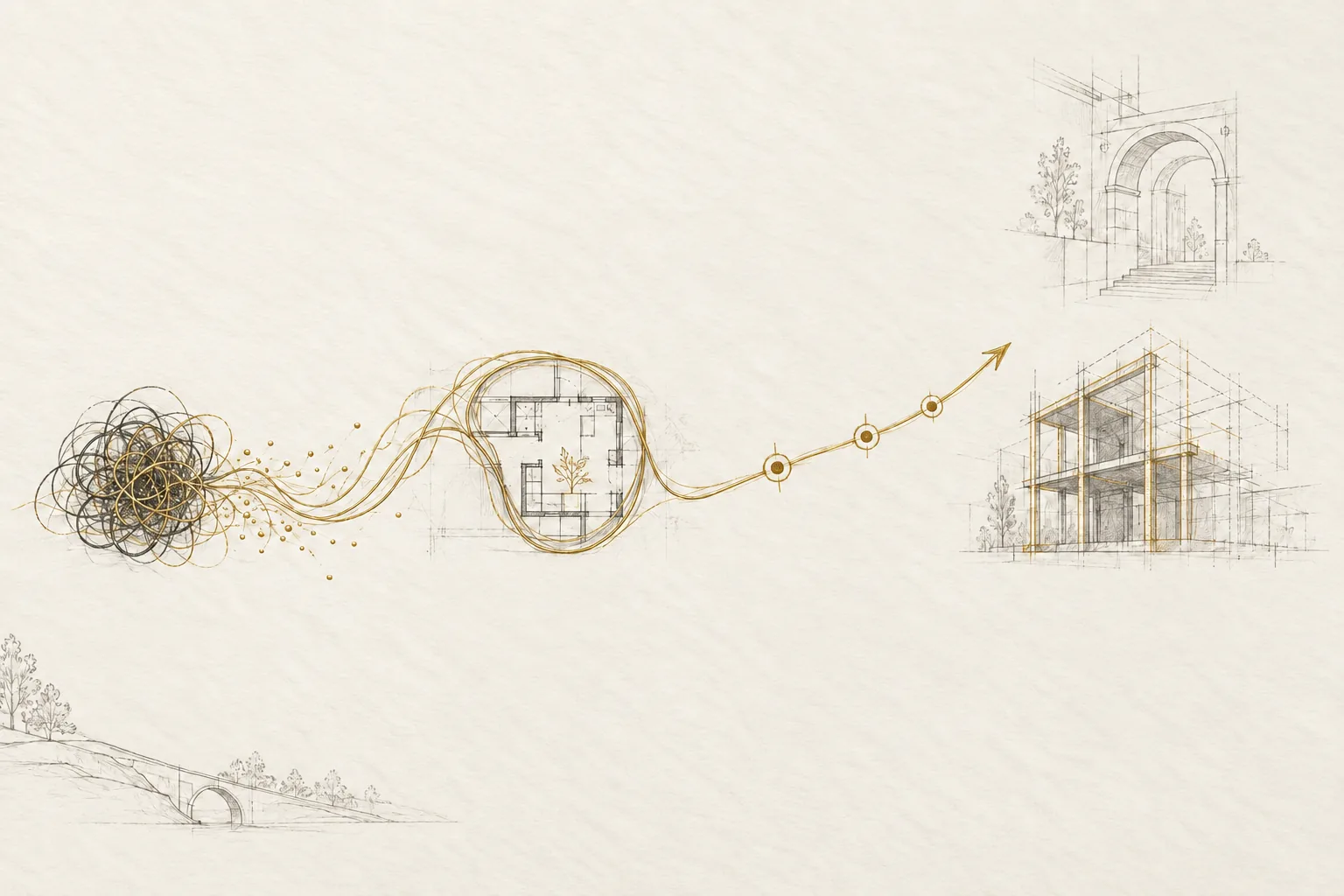
Case 03 · Illustrative case · In progress
He betrayed me. Why was I still afraid to leave?
Architect · 42
- What was I afraid to lose?
- his gaze ≠ my power
- a goal with dates
Case 04 · Illustrative case
A founder's transformation map
Founder
He had built a business that depended on him. Decisions passed through him. Problems reached him first. From the outside, he looked capable and successful. From the inside, he felt increasingly absent from what he had created.
His question was not whether he could work harder. He already knew he could. His question was why growth no longer gave him energy, and why stepping back, even briefly, felt so difficult.
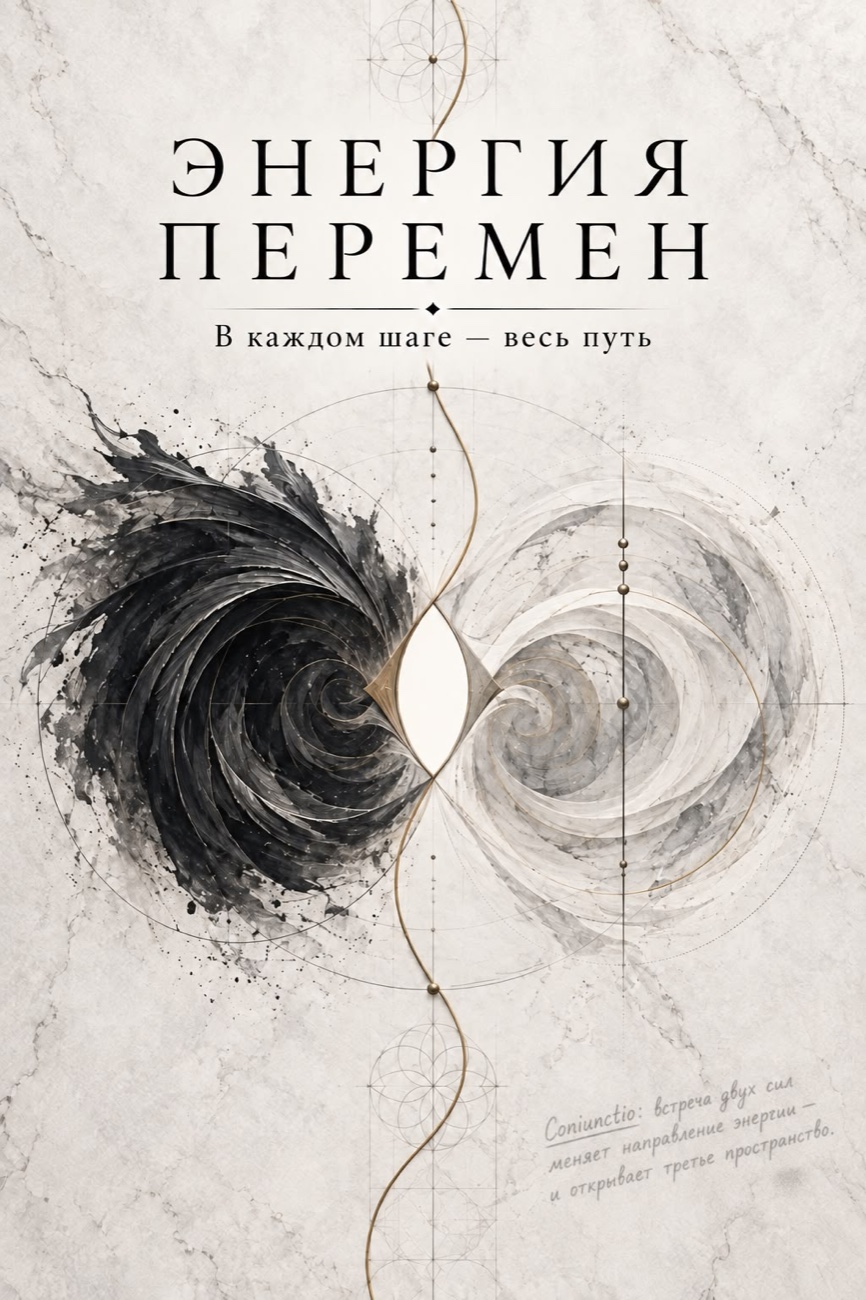
This map follows four portals: Energy → Form → Direction → Structure. They come from the architecture of The Energy of Change, a novel in which transformation is lived through choices, encounters and movement. In our work, those portals became a way to investigate his own story. Each portal involved consultation, observation between meetings, a movement practice chosen for the psychological task, and a review of what changed.
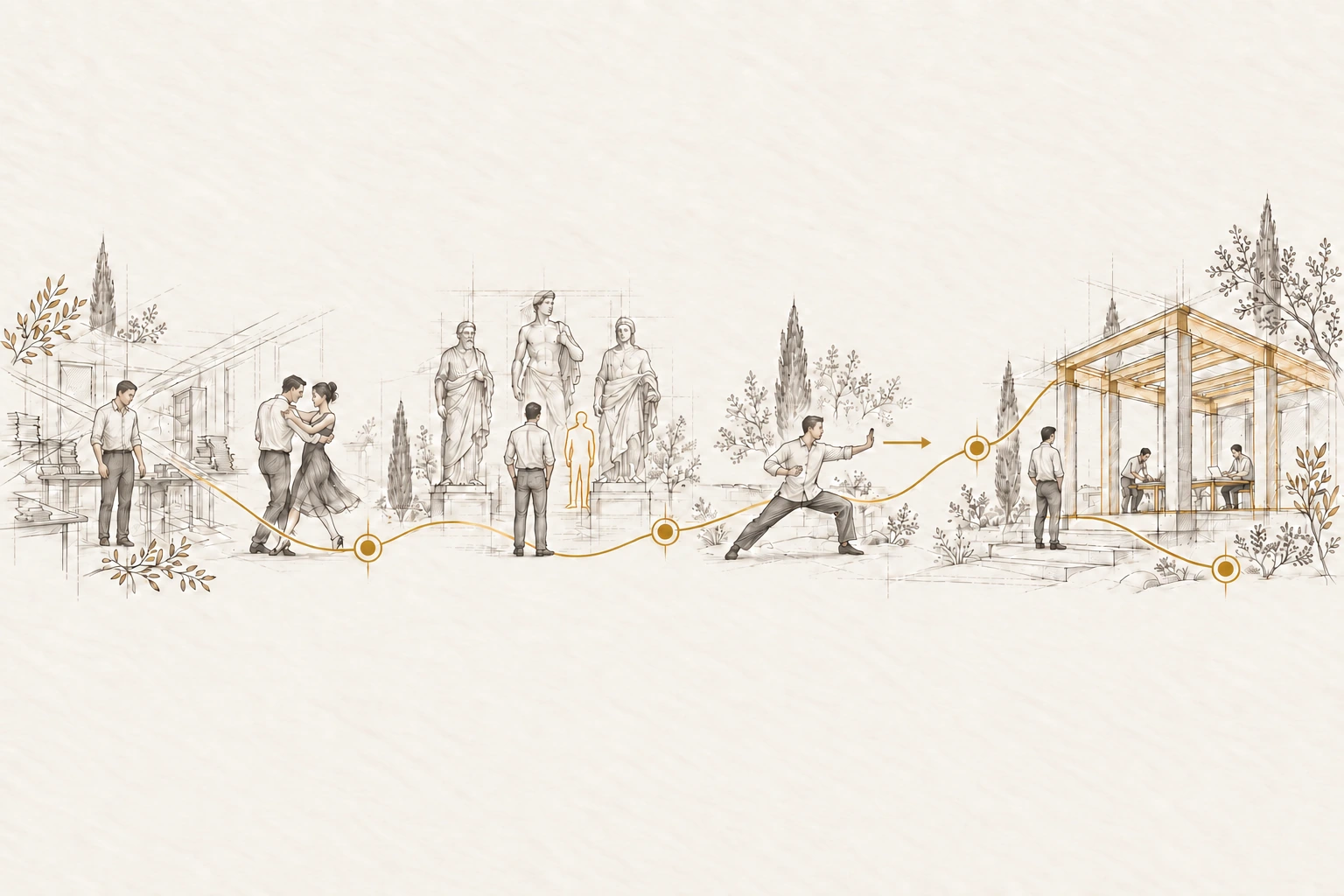
The four portals are stages of transformation, not four individual sessions.
Portal I
Where is the energy going?
We began with a psychoanalytic consultation and a map of his Inner Forces: the unconscious patterns behind his familiar ways of responding. Rather than treating exhaustion as a problem of time management, we looked at what repeatedly claimed his energy.
He noticed that a request for help often felt like proof that only he could solve a problem. He stepped in before others had room to act. His competence brought relief in the moment, but it also restored the very arrangement that depleted him.
The first question was therefore not “How do we make him more productive?” It was: Where does his energy leave him, what keeps drawing it there, and under what conditions does it return?
We traced the difference between effort that animated him and effort driven by an old obligation to remain indispensable. Between consultations, he recorded the moments when he felt alert, flat, irritated or unexpectedly curious. These observations gave us a more precise map than a general statement such as “I am burned out.”
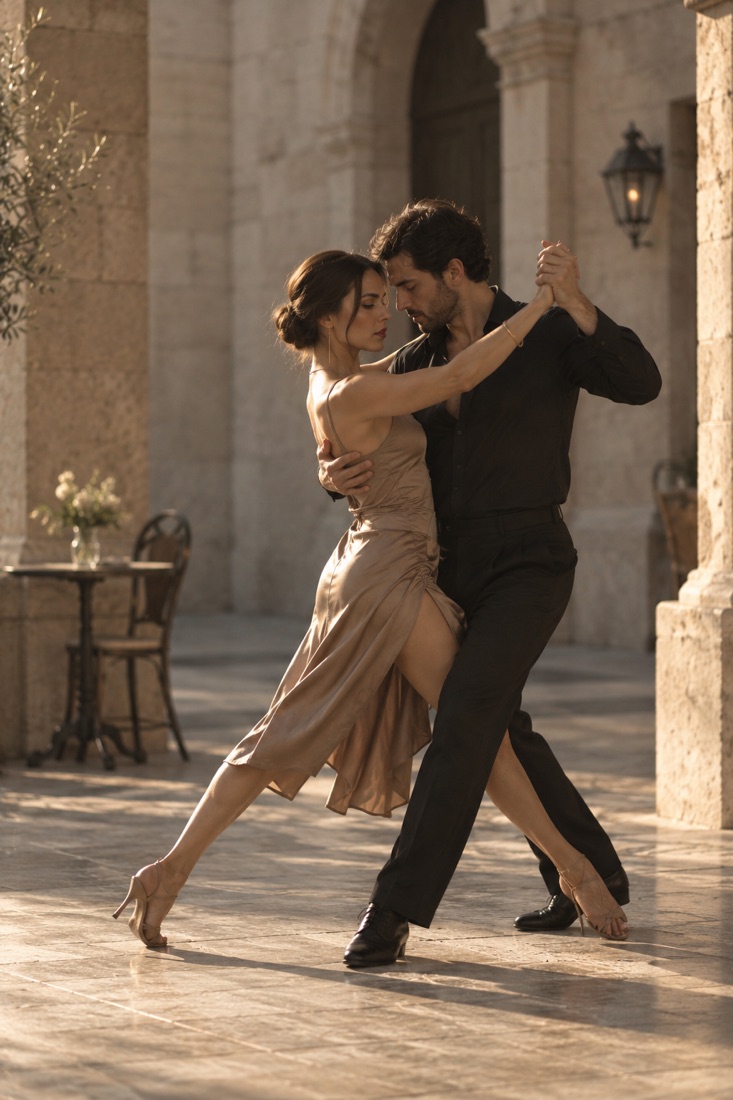
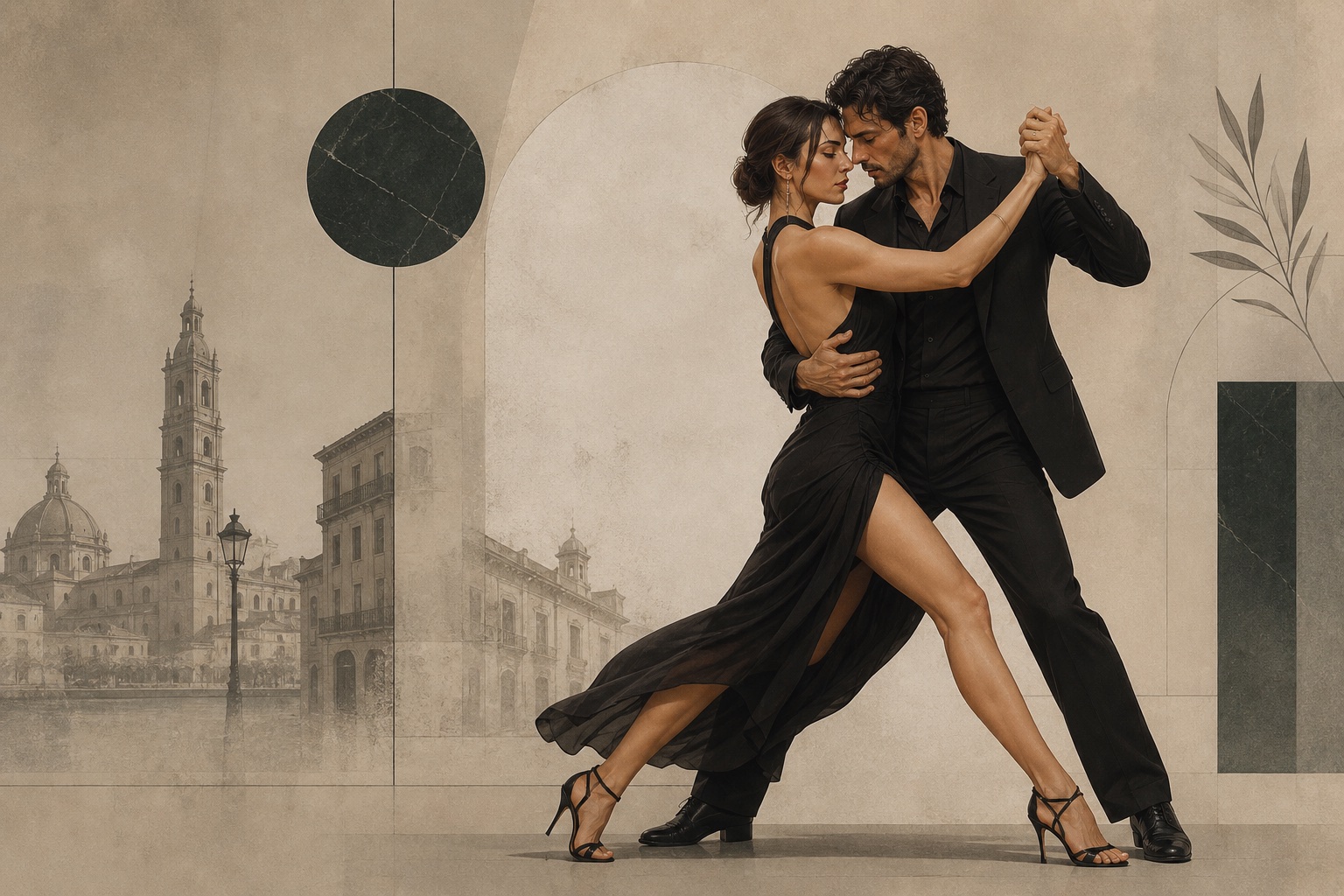
Then the work entered the body. We chose tango as his first movement laboratory because he responded to it, and because its conditions brought his pattern into view: another person proposes, responds, changes pace and cannot be completely controlled. He entered as a beginner. For a while, his professional authority could not help him.
That unfamiliarity mattered. In the book, the first portal opens when the old way of knowing no longer carries the person forward. Here, novelty interrupted a rehearsed role. He did not have to perform mastery to participate. His attention returned to what was happening now: contact, timing, a missed cue, another attempt.
We reviewed what occurred in the practice alongside what happened at work. The aim was not to declare that a dance lesson had “fixed” exhaustion. It was to find a repeatable source of energy and notice the conditions that extinguished it.
Portal gift
Renewed vitality and the ability to recognize where his energy is lost or restored.
“I can be new at something without becoming less of myself.”
Portal II
What is actually his?
As energy returned, another question emerged. He admired people who seemed decisive, inventive and free. Yet he often spoke of these qualities as if they belonged elsewhere.
In consultation, we explored the figures he looked up to and what he imagined they possessed. Instead of asking him to imitate them, we looked for evidence of those same capacities in his own history. Where had he already made an original choice? What had he built that could not have come from someone else’s formula?
This was the work of form: distinguishing his own strengths from an image of the person he thought a successful founder should be. His home experiments were small and concrete. He noticed when he borrowed another person’s language for a decision, and when he could state his own position without using that person as a reference.
The movement practice gave this question a visible shape. In tango, he could reproduce a sequence precisely and still feel disconnected from it. When he began to attend to the movement as it was actually unfolding between two people, a different quality appeared. He was working with what he felt and perceived, rather than only trying to look correct.
We also used Gestalt-informed experiments: attending closely to what happened at the moment he tried to make a choice, say what he wanted or allow another person to respond differently. These experiments did not supply an identity for him. They made his habitual interruptions visible, so that another response could be tried and examined.
The book’s second portal asks a similar question: when another person or force awakens something in us, can we recognize that capacity as our own? Inspiration becomes useful when it takes a form we can inhabit.
Portal gift
Authorship: the ability to act from a strength he recognizes as his own.
“What I admired was also something I had not allowed myself to claim.”
Portal III
What does the energy serve?
With more energy available, the work became sharper. He could see how often frustration turned inward as pressure to do more. He called this discipline. In practice, it sometimes prevented him from naming a disagreement, refusing a demand or completing a decision.
The third portal gave that force a direction.
We introduced a structured martial movement practice, chosen to explore stance, boundaries and purposeful action. The task was not to become aggressive. It was to experience the difference between force scattered through self-criticism and force directed toward a clear action. In consultation, we examined where that difference appeared in his working life.
His experiments between meetings were specific: one clear “no” where he would usually overexplain, and one decision he would carry through instead of keeping it open for another round of reassurance. We reviewed both what he did and what he felt before, during and after doing it.
This is the work of the third portal in The Energy of Change: movement alone does not create a path. Energy needs a direction. In the novel, the body, conflict and choice make that question impossible to answer only in theory. In this case, the question became practical: What is he protecting, what is he choosing, and where must his force go?
Portal gift
The ability to turn pressure into a boundary, a choice and an action.
“A clear no left more energy for a meaningful yes.”
Portal IV
What can hold the change?
A new response during a session is valuable. The final portal asked whether his life and business could support it.
His company still returned too many decisions to him. If every moment of renewed energy was spent holding the whole system together, he would be pulled back into the earlier pattern. We therefore worked on structure: which responsibilities were truly his, which required a shared process, and where someone else needed space to act.
He chose one area to delegate and one recurring decision to turn into a clear process. We examined his reaction when another person carried out that work in a different way. The experiment was not simply to hand off a task. It was to remain present without taking control back at the first sign of discomfort.
Here the movement laboratory helped us revisit the same pattern in real time. Could he offer direction and still receive a response? Could he keep his own axis while allowing another person theirs? We brought what appeared in practice back into consultation, then tested a corresponding change at work.
The fourth portal of the book concerns architecture: what must be built so that change can endure beyond a powerful moment? For this founder, structure meant a business that could operate without asking him to be its constant source of certainty. It also gave him a new relationship to his own energy. He could invest it, rather than spend it repeatedly repairing the same arrangement.
Portal gift
A working structure that supports action without constant overcontrol.
“I do not have to hold every part for the whole to stand.”
MethodsPsychoanalytic inquiry · Inner Forces mapping · Gestalt-informed experiments · Psychology of Movement
This route did not begin by asking him to become a different person. It began by making an existing pattern visible.
The Inner Forces map helped us see how his unconscious response shaped his decisions and where it consumed energy. Psychoanalytic inquiry gave that pattern a history and meaning. Gestalt-informed experiments brought attention to the moment it appeared and allowed a different response to be tried. Psychology of Movement took the work into lived experience: a carefully chosen practice made control, uncertainty, force and partnership tangible. Consultation connected each experience back to the decisions he faced outside the room.
Across the four portals, energy was found, given form, directed and held. The change was not that he learned to do more. He began to recognize which inner function a situation called for, and to build conditions in which he could use it.
The Energy of Change is not a manual with a fixed exercise for each chapter. Its four portals let the reader encounter the questions of change through a story before meeting them in their own life. A scene may draw attention to a choice, a fear or a pattern that a direct instruction would leave untouched.
The book offers a language for noticing the journey. A personal transformation map takes the next step: it investigates your patterns, selects experiences that bring them into view, and follows what happens when you begin to act differently.
Read the book. Follow the four portals. Then discover what your own map asks of you.
Explore a personal transformation map →
A five-session process that brings your Inner Forces portrait, lived history and current goal together. We identify the pattern, choose a movement practice that fits you, and build a roadmap with clear steps and time frames.
Explore the Hero's Map →Case 03 · Illustrative case · In progress
Architect · 42